
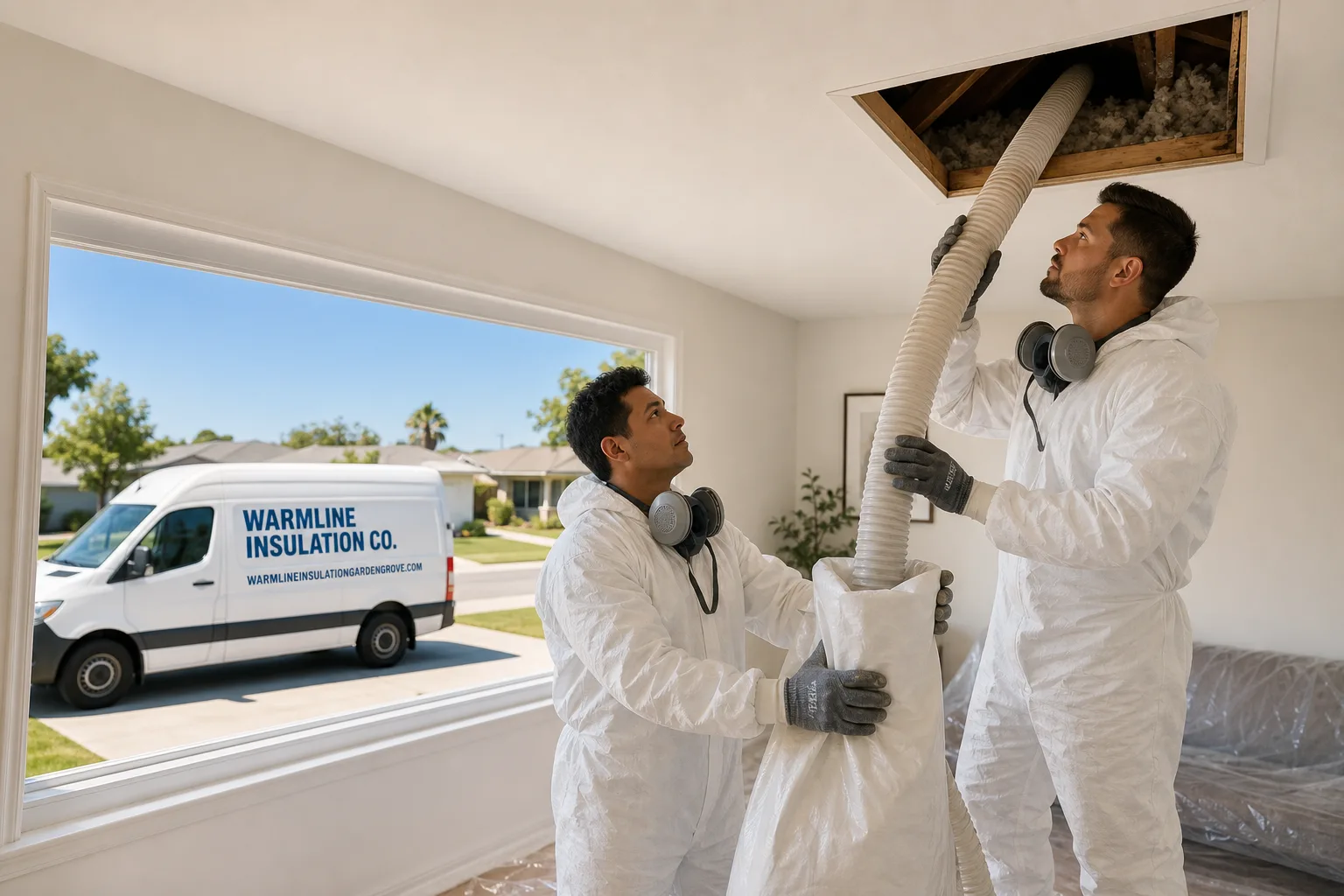

Fast, Reliable Attic Insulation Across Brea
If your Brea home was built between the late 1960s and 1980s, your attic likely has R-11 fiberglass batts that have settled to a fraction of their original depth and now perform far below what California Title 24 requires. Warmline Insulation Co. brings real building-science knowledge to every job, starting with the wind-pressure and air-sealing realities of Brea’s unique hillside geography. A live person answers when you call (657) 213-3642 – 24 hours a day, no voicemail, no runaround. Most Brea jobs are done in a single visit.
Key Takeaways:
- Santa Ana wind events funnel through Carbon Canyon and pressurize Brea attics, making air sealing a prerequisite for insulation to actually work.
- Most Brea tract homes have original attic insulation rated R-11 or less; current code calls for R-38 or higher.
- We stock batt, blown-in, and baffle materials for same-week installation in Brea – no waiting on special orders.
- Every Brea attic job is backed by our 90-Day Done Right Promise and our licensed, insured, background-checked crews.
How Much Does Attic Insulation Cost in Brea, CA?
Attic insulation in Brea typically runs $1.75-$3.75 per square foot for blown-in fiberglass or cellulose depending on depth, existing condition, and whether air sealing is included. A standard 1,500-2,200 sq ft Brea tract home usually lands between $2,200 and $5,800 for a full attic insulation replacement with air sealing. Top-ups of 4-6 inches run $900-$1,700. Below is a clearer breakdown for this market.
| Service | Typical Brea Price Range | Notes |
|---|---|---|
| Blown-In Attic Insulation (R-38) | $1.75-$2.75 / sq ft | Most common; includes removal prep where needed |
| Attic Batt Insulation (R-38) | $2.25-$3.75 / sq ft | Best for open, unobstructed attics |
| Attic Insulation Top-Up (4-6 inches) | $900-$1,700 total | Good if existing insulation is dry and not compressed |
| Attic Insulation Replacement (full) | $2,200-$6,500 | Includes removal of old batts or contaminated material |
| Attic Baffles & Ventilation Prep | $350-$900 | Critical for Carbon Canyon-adjacent homes |
Why Warmline Insulation Co. Is Brea’s Preferred Attic Insulation Company
We are a full-spectrum insulation contractor – Attic Insulation is one of ten services we handle under one roof, from air sealing to crawl space encapsulation. That means when we diagnose your Brea attic, we see the whole building envelope, not just the insulation layer. Local homeowners call us because we understand what they are dealing with: the summer heat that pushes attic temperatures above 150°F, the Santa Ana wind that pressurizes their ceiling plane, and the original 1960s-80s construction that was never designed for today’s comfort or energy expectations.
Neil Ashford founded Warmline Insulation Co. in 2011, and we have spent the years since building a reputation in Brea for showing up on time, doing the job in one visit, and standing behind the work with a written 90-Day Done Right Promise. Our technicians are background-checked and uniformed. Our pricing is upfront, and a live person answers every call around the clock. When a Brea homeowner schedules with us, they get a real diagnosis, not a sales pitch.
We are licensed and insured on every job. We also stock materials locally for Brea customers so we are not waiting on shipments from a distribution yard in another county. And our standing offers – $50 Off Any Repair Over $250, an $89 Seasonal Tune-Up, and a permanent 5% Senior & Veteran discount – are applied at booking, not hidden in fine print.
Our Attic Insulation Services in Brea
Blown-In Attic Insulation
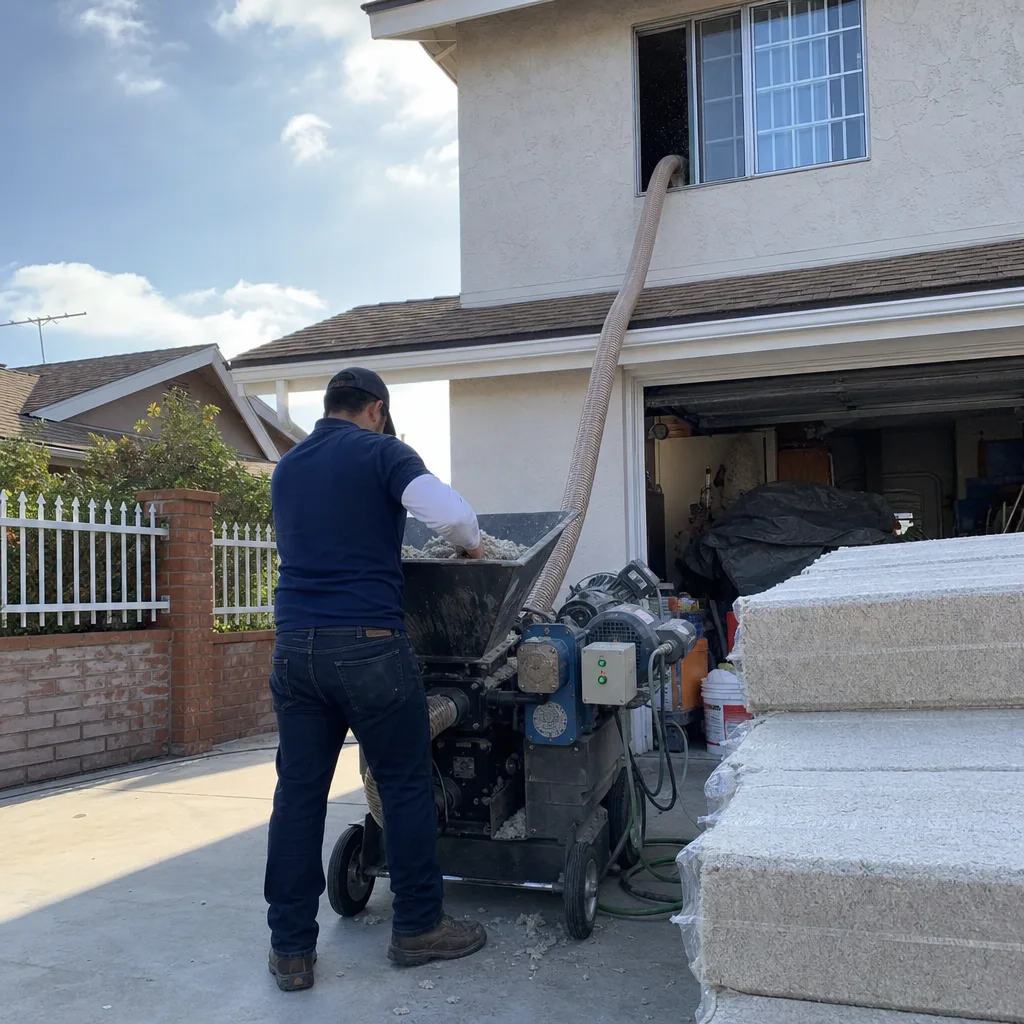
Blown-in insulation is the workhorse for Brea tract homes. We use Owens Corning AttiCat and GreenFiber cellulose, installed to R-38 or higher with consistent depth and full coverage. For Brea’s flatland tracts south of Imperial Highway, this is often the fastest path to lower cooling bills. For hillside homes backing toward Carbon Canyon, we insist on air sealing first – otherwise the wind-driven convective loop keeps pulling conditioned air out through the top plates no matter how much insulation we blow in.
Attic Batt Insulation
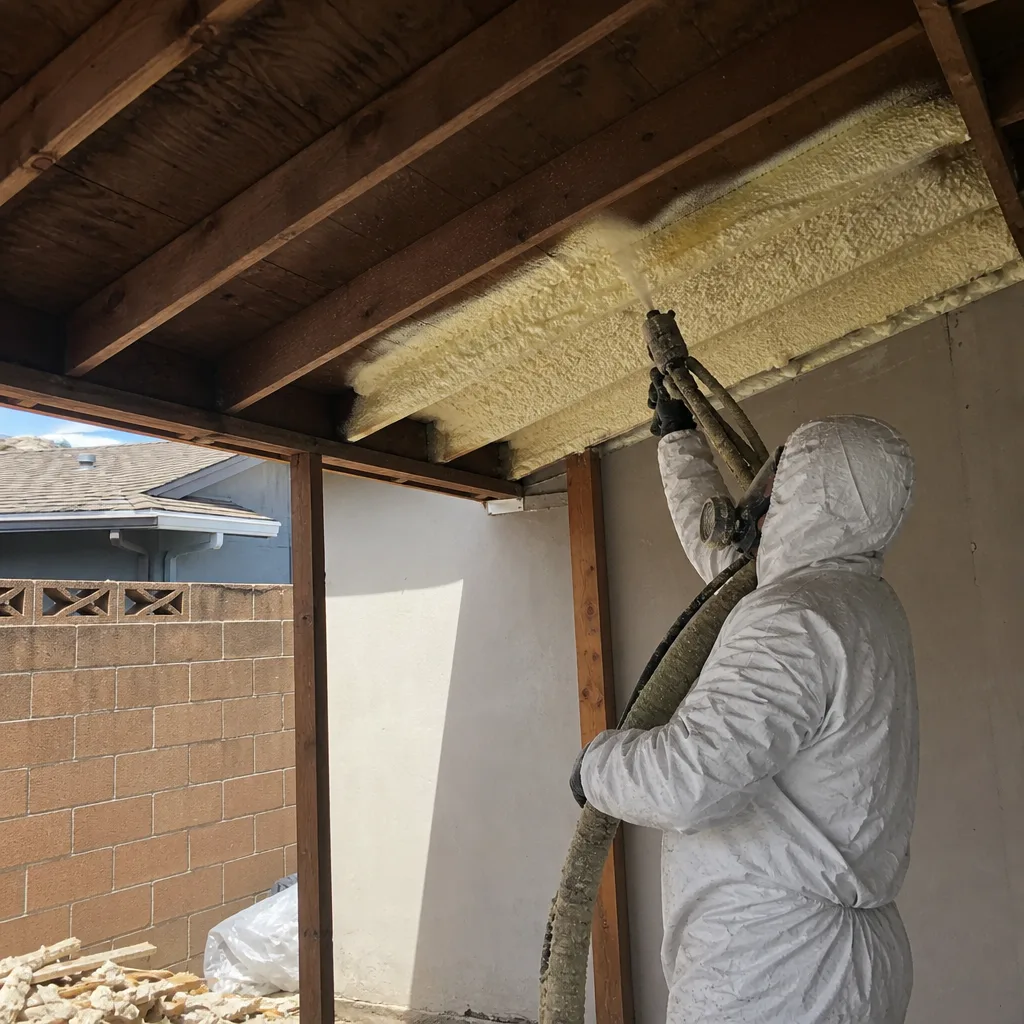
Batt insulation fits well in Brea attics that are open and unobstructed, particularly single-story ranch-style homes in the older subdivisions. We install Johns Manville and Owens Corning batts with careful, joint-staggered placement. In Brea’s 1960s-era homes where the original batts have slumped and compressed under decades of radiant heat cycling, we often recommend full removal and replacement rather than layering new batts over failed ones.
Attic Insulation Top-Up
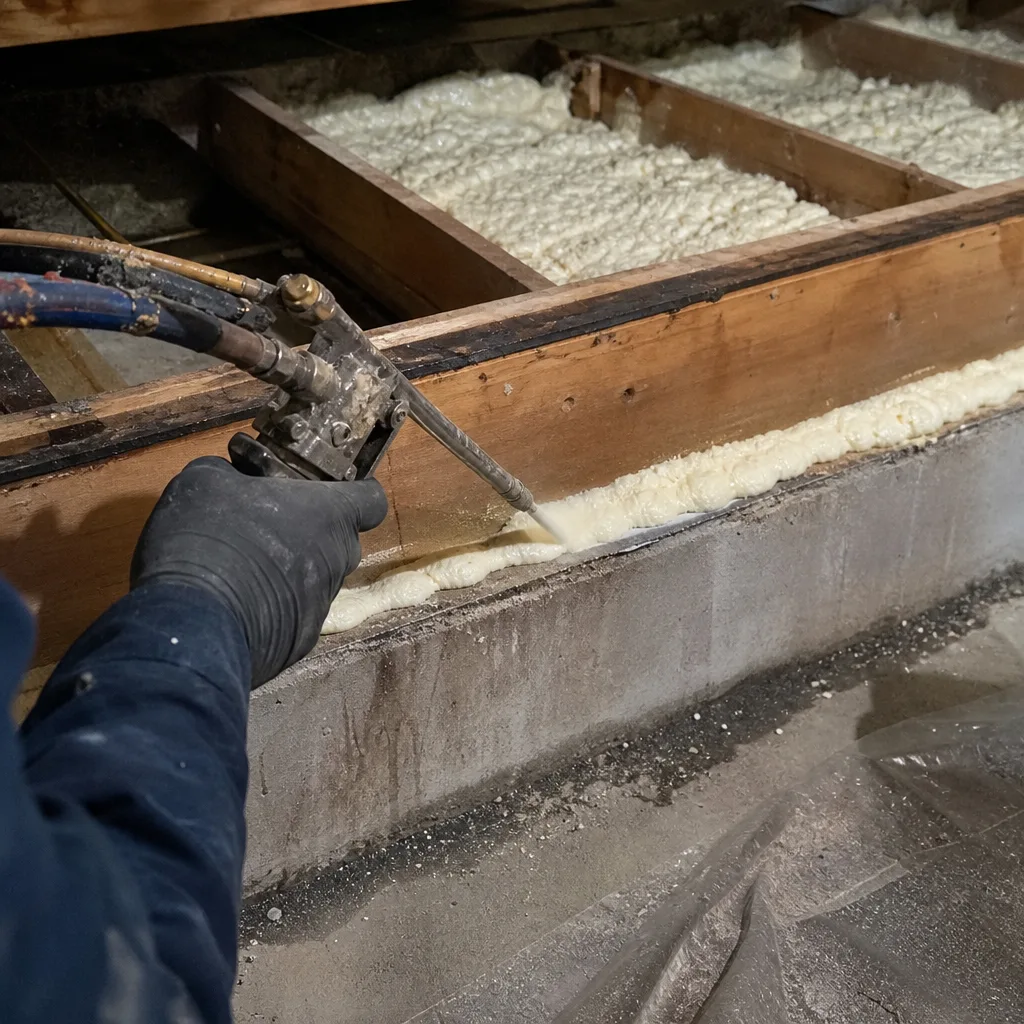
If your Brea attic has existing insulation that is dry, not compressed, and not pest-damaged, a top-up may be the most cost-effective route. We add 4-6 inches of blown-in fiberglass or cellulose to bring the total depth up to R-38 or better. Keep in mind: in Brea’s hillside neighborhoods, a top-up without air sealing will underdeliver, because the wind pressure through Carbon Canyon bypasses the thermal barrier entirely.
Attic Insulation Replacement
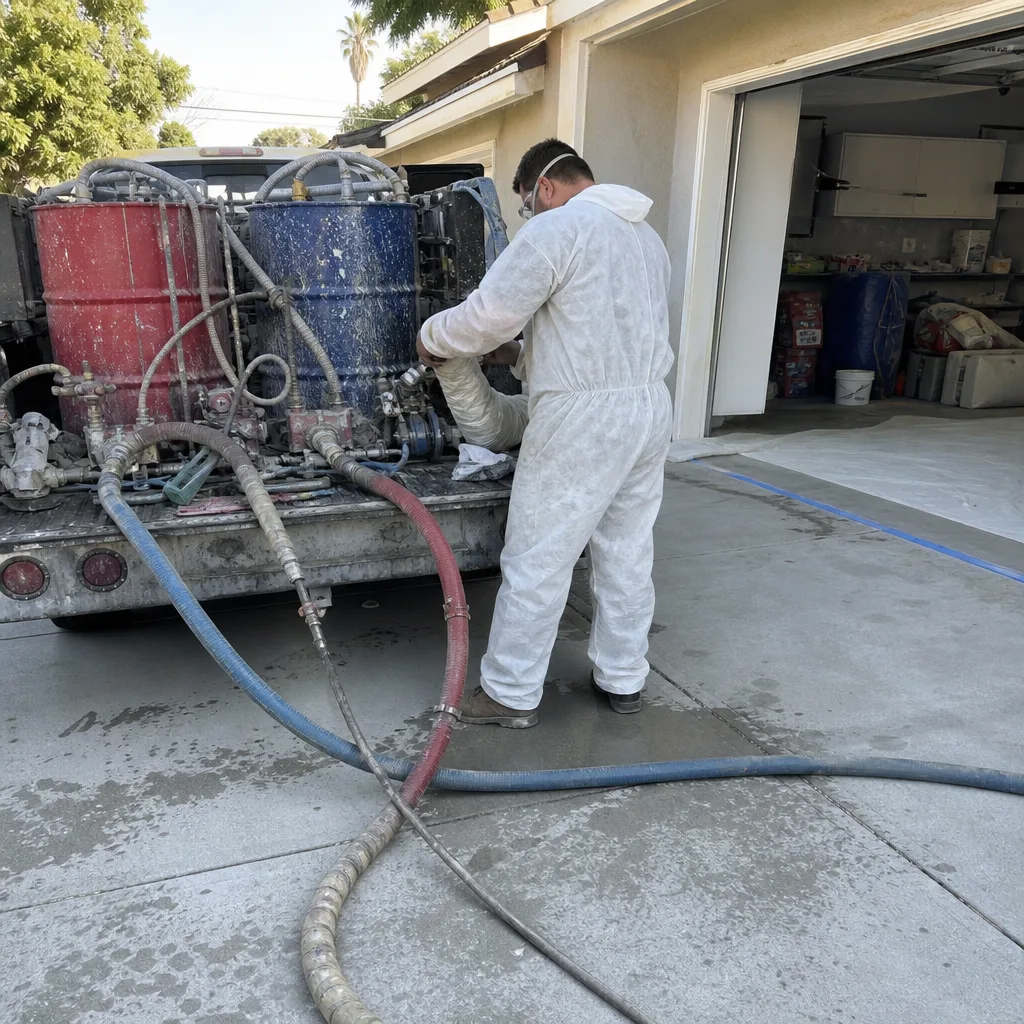
Full replacement is the right call when original batts have degraded, when rodents have nested in the attic, or when moisture from blocked soffit vents has caused mold. We remove the old material, sanitize the attic deck, air-seal the bypasses, install baffles at every soffit vent, and blow in fresh insulation to current code. This is the most common job we do in Brea’s older tract homes and historic oil-era bungalows near downtown.
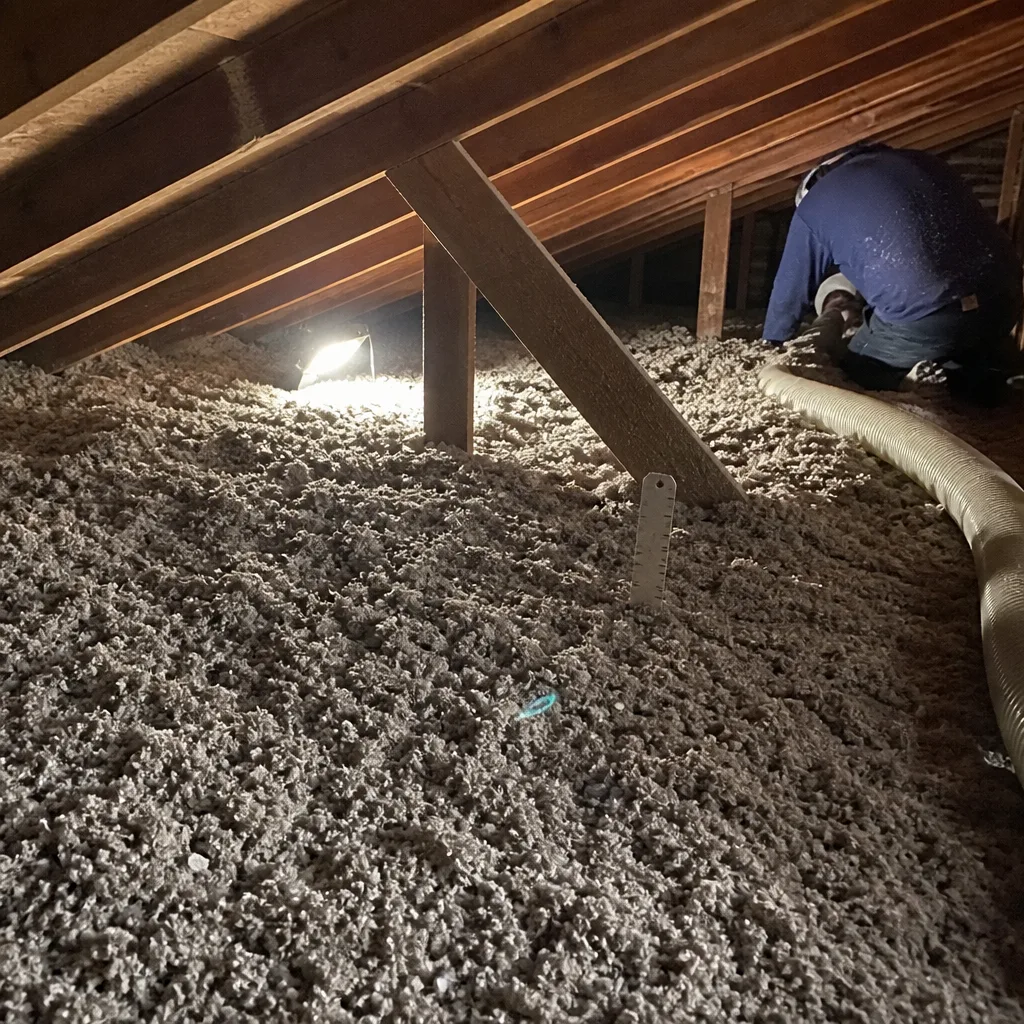
Attic Baffles & Ventilation Prep
In northern Brea hillside homes backing to the Puente Hills, soffit vents are frequently undersized or blocked by original construction debris. That means attic air can’t circulate properly, moisture builds in winter, and wind-driven rain can intrude. We install baffles at every vent bay before insulation goes in. It is not optional on Carbon Canyon-adjacent homes; it is the difference between an attic that breathes and one that overheats and traps moisture.
What happens when you call
- 1
A real person answersNo phone trees - you reach a local pro.
- 2
You get an upfront price rangeHonest numbers before anyone is dispatched.
- 3
A background-checked tech heads outLicensed & insured, dispatched right away.
- 4
You approve before work beginsNothing starts until you say go.
Trusted Brands We Service in Brea
We install materials from the manufacturers building scientists trust most: Owens Corning, Johns Manville, GreenFiber, Demilec, Rockwool, and CertainTeed. We carry batt and blown-in products in the sizes and R-values that Brea’s housing stock actually needs, so most jobs are completed in a single visit. You don’t pay for three weeks of lead time on a special order, and you don’t settle for whatever the distributor happens to have in stock.

Common Attic Insulation Problems We See in Brea Homes
- Original fiberglass batts slumped and compressed in 1960s-80s tract homes. Decades of 150°F summer attic temperatures break down the binder in old fiberglass, and the batts settle to less than half their original depth. Effective R-value drops below code, often below R-8.
- Wind-driven air leaks through unsealed top plates and bypasses. On hillside edges backing toward Carbon Canyon, Santa Ana winds pressurize the attic and pull conditioned air out of the living space. Blown-in insulation alone cannot stop this convective loop.
- Blocked or undersized soffit vents causing winter moisture buildup. We see this constantly in northern Brea homes. Cold-air drainage at night combined with blocked vents traps moisture against the roof deck, leading to mold and sheathing rot.
- Downtown oil-era bungalows with no wall insulation and minimal attic coverage. Many early 20th-century Brea homes near downtown have no wall cavities insulated at all. Attic work is the highest-impact first step, but it cannot compensate for completely uninsulated walls.
Brea’s Wind Problem: Why Air Sealing Comes Before Insulation
Here is something you will not find in a generic attic insulation guide. Brea sits at the base of the Puente Hills, and Carbon Canyon (SR-142) acts as a natural funnel for Santa Ana wind events. In northern hillside neighborhoods like Olinda Ranch and the streets backing toward the canyon, these winds load direct pressure on the building envelope. The result is pressure-driven air infiltration through top plates, plumbing chases, and electrical penetrations – the bypasses that sit between your attic and your conditioned living space.
When pressurized attic air gets pulled through those bypasses, it carries conditioned air out and pulls 150°F+ summer attic air into the home. Blown-in insulation, no matter how thick, sits above that bypass level. It cannot stop the airflow. This is why we sequence our Brea hillside jobs differently than flatland or coastal work: air sealing and top-plate sealing first, baffles second, insulation third. In flat, sheltered tracts further south in the city, the sequencing is less critical. But anywhere the canyon wind reaches, skipping air sealing means paying for insulation that never delivers its rated R-value.
What We Found in Olinda Ranch
On a two-story tract home in the Olinda Ranch area backing toward Carbon Canyon, our crew found the original R-11 fiberglass batts in the attic had settled to under 4 inches. But the bigger problem was the top plates. Gaps along the perimeter were letting canyon wind pressurize the ceiling plane. We air-sealed the bypasses and top plates, installed new baffles at the soffit vents, then blew in Owens Corning AttiCat to R-38. The homeowner reported the upstairs rooms held temperature for the first time in years, even during a Santa Ana event. That is what happens when the sequencing is right.
Brea Housing Stock: What You’re Probably Working With
The bulk of Brea’s residential stock went up during the city’s rapid suburban expansion from the late 1960s through the 1980s. These are single-story and two-story tract homes with original fiberglass batts rated R-11 or less in walls, and attic insulation that has thinned considerably. Title 24 now mandates far higher insulation levels than these homes were ever built to meet. A smaller historic core near downtown includes early 20th-century oil-era bungalows. Brea was founded on petroleum extraction, and many of those homes were built before wall insulation was standard. They frequently have little to no wall insulation at all.
This matters for attic work. In a tract home, attic insulation is the single highest-leverage upgrade you can make, because the attic is the largest continuous thermal boundary. In an oil-era bungalow, attic work is still the right first step, but it cannot compensate for entirely uninsulated walls. We tell Brea homeowners this honestly, often during a home energy audit that shows them exactly where their heat gain and loss is happening. That is the diagnostic starting point that makes every subsequent insulation service smarter and more targeted.
Pricing for Attic Insulation in Brea, CA
A typical Brea attic insulation replacement runs $2,200-$6,500 depending on home size, attic condition, and whether air sealing and baffle work are included. Top-ups are less: $900-$1,700 for 4-6 added inches. If your attic has pest damage, mold, or needs old material removed first, expect the higher end of the range. We provide upfront pricing before any work begins, so there are no surprises. Every Brea estimate is free, and a live person answers when you call (657) 213-3642 to book one.
We Also Serve Cities Near Brea
Our crews serve Brea and the surrounding northern Orange County communities. If you live in La Habra, Placentia, Yorba Linda, or Villa Park, we cover those too. Learn more about our service area and what we do for Attic Insulation in Brea homeowners across the region.
Serving Brea, CA - Our Local Coverage Area
We’re based in the Brea area and know this community well. Use the map below to see our service coverage - if you’re nearby, we can almost certainly help.
FAQs - Attic Insulation in Brea
Because Carbon Canyon funnels Santa Ana winds directly into northern Brea hillside neighborhoods, pressurizing attics and forcing air through unsealed top plates and bypasses. Insulation alone cannot stop this convective loop. Coastal Orange County homes rarely face this pressure loading, so the sequencing is less critical there. Call (657) 213-3642 for an air-sealing evaluation – estimates are free.
Most original Brea tract homes were built with R-11 fiberglass batts, roughly 3.5 inches thick. After decades of heat cycling and compression, we regularly find them settled to under 4 inches of effective depth. Current code calls for R-38 or higher, so these homes are dramatically underperforming.
Brea attics regularly exceed 150°F in summer because the city sits inland with minimal marine-layer cooling. Insulation slows heat transfer into the living space, but it cannot eliminate it. That is why ventilation and radiant barriers are part of the conversation for Brea homes, especially on hillside edges where radiant heat gain is amplified.
Many early 20th-century Brea bungalows have no wall insulation at all. Attic insulation is the highest-impact first step, but it cannot fully compensate for uninsulated walls. A home energy audit shows exactly where your heat gain is happening, so you invest in the right fix first.
Because soffit vents on those hillside homes are frequently undersized or blocked by construction debris, and the wind-driven pressure from Carbon Canyon makes proper attic ventilation critical. Baffles keep insulation from blocking the vents and allow the attic to breathe. Flatland tracts further south in Brea rarely have the same wind-loading problem.
Written by Neil Ashford, Owner at Warmline Insulation Co., serving Brea and northern Orange County since 2011.